
There are movies you love because they are perfect.
Then there are movies you love because you saw them at exactly the right age, on exactly the right night, in exactly the right emotional state to have them permanently soldered to your childhood brain.
For me, KING KONG from 1976 is one of those movies.
I am pretty sure I first saw it as a kid when it aired as NBC’s Sunday Night Movie. Or maybe it was Saturday night. Memory is funny that way. The details get fuzzy, but the feelings stay loud. I remember the scale. I remember the fear. I remember the weirdness. I remember Jessica Lange making my little kid heart swoon. I remember Kong falling. I remember the heartbeat slowing. I remember crying my eyes out.
And I remember thinking this was one of the biggest movies I had ever seen.
Rewatching it now, nearly 50 years later, KING KONG is a fascinating object. It is messy. It is audacious. It is gorgeous in places. It is deeply, aggressively 1970s. It is corny. It is horny. It is ambitious. It is sometimes incredible and sometimes ridiculous, occasionally within the same scene.
In other words: it rules.
Not because it all works.
Because it swings like hell.
Dino Wanted His JAWS
The mid-1970s changed Hollywood forever.
JAWS had arrived in 1975 and basically invented the modern summer blockbuster. It was not just a hit. It was a cultural weather event. Suddenly every studio and every producer wanted the next giant movie that could dominate the conversation, swallow the box office, and become the thing everyone had to see.
Enter Dino De Laurentiis.
Dino did not do small. Subtle was not really the man’s operating system. He wanted spectacle. He wanted scale. He wanted an event. So naturally, he looked at KING KONG, one of cinema’s original monster myths, and thought: there it is. There’s my big beast. There’s my JAWS.
And you can feel that ambition in every inch of the 1976 film.
This was not some quiet little remake. This was a giant, expensive, heavily promoted attempt to bring Kong roaring into the blockbuster age. The movie was directed by John Guillermin, produced by De Laurentiis, written by Lorenzo Semple Jr., and built around a then-modernized story that tried to drag Kong out of Depression-era adventure mythology and into the anxious, oil-starved, corporate 1970s.
That shift is one of the smartest things the movie does.
The original KING KONG was about a film crew heading to Skull Island to make a movie. The 1976 version says, nah, this is the 1970s. We are not chasing pictures. We are chasing oil.
That one change completely alters the movie’s energy.
From Showbiz to Oil Crisis
The 1976 KING KONG sends a Petrox expedition to a mysterious island in search of oil. Charles Grodin plays Fred Wilson, an executive who sees the island less as a wonder of the world and more as a potential balance sheet. Jeff Bridges plays Jack Prescott, a primate paleontologist and stowaway who understands pretty quickly that corporate ambition and mysterious islands rarely make good bedfellows. Jessica Lange plays Dwan, a shipwrecked aspiring actress who becomes the object of Kong’s fascination.
The oil angle is perfect for the 1970s.
This was a decade shaped by energy anxiety, gas lines, corporate mistrust, and the sense that the modern world was powered by people willing to dig, drill, and exploit whatever they could find. Changing the motivation from “let’s make a movie” to “let’s find oil” gives this version a very specific 1970s flavor.
It is not just adventure.
It is capitalism in a safari hat.
Grodin’s Wilson is not really a villain because he hates Kong. He is worse than that. He sees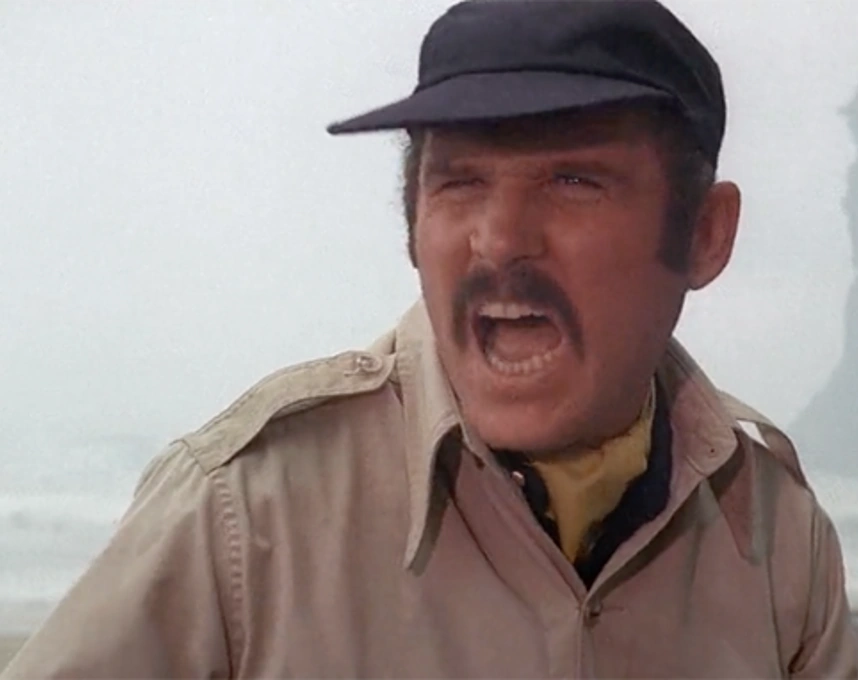 Kong as an opportunity. First the island is supposed to make him rich through oil. Then Kong becomes the product. The brand. The mascot. The thing he can drag back to New York and sell to the masses.
That still works.
Honestly, it may work better now than it did then.
The Audacity of the Whole Thing
One of the things I love most about KING KONG 1976 is the sheer audacity of it.
This movie is not timid. It is not shy. It is not asking politely for permission to exist. It is a giant ape movie that behaves like a giant ape movie should: big, strange, emotional, excessive, and occasionally completely out of its mind.
The production famously built a massive animatronic Kong. It was an enormous, wildly ambitious piece of movie engineering, and by most accounts, it barely worked well enough to be useful. That could be seen as a failure, and in practical terms, sure, it probably was.
But I kind of love the attempt.
There is something deeply cool about the ambition. They wanted a giant mechanical Kong. They wanted to make the impossible tangible. They wanted an audience to feel like this creature had weight and presence. Even if the technology was not quite there, the imagination was.
Most of the Kong performance that works comes through Rick Baker in the suit, and watching it now, the limitations are obvious. There are moments where Kong feels powerful and expressive, and there are moments where he looks like a guy in a big ape suit because, well, he is.
But that is also part of the charm.
Modern effects can do almost anything, and yet sometimes I miss the handmade insanity of movies like this. The seams are visible. The ambition is visible too.
I will take visible ambition over sterile perfection any day.
Jeff Bridges, Jessica Lange, and Charles Grodin Going Full 1970s
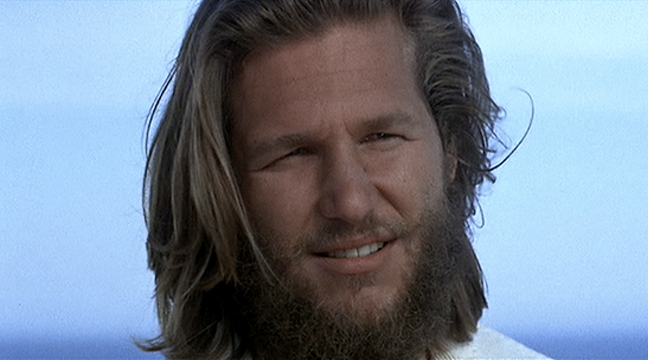
Jeff Bridges is already a leading man here.
You can see it. He has that scruffy, intelligent, movie-star thing working. He looks like a guy who wandered out of a 1970s environmental thriller and accidentally into a giant ape movie, which is honestly perfect. His Jack Prescott is skeptical, morally alert, and just rumpled enough to make you believe he smells like ocean air, cigarettes, and righteous indignation.
Charles Grodin is also kind of spectacular because he understands exactly what kind of movie he is in. Fred Wilson is corporate arrogance with teeth. He is not subtle. He is not supposed to be. He is capitalism with a hard hat and a marketing plan. When Kong finally breaks loose in New York, Wilson’s whole worldview gets stomped flat.
Literally.
And then there is Jessica Lange.
Boy howdy.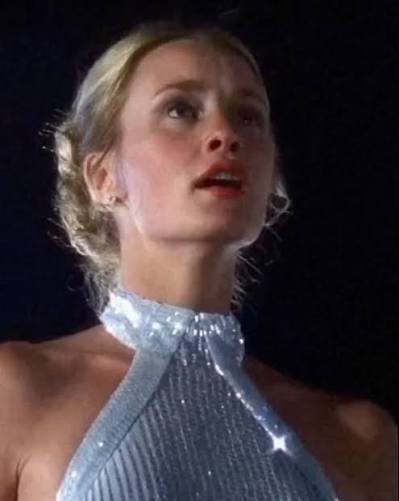
As a kid, Jessica Lange made my heart swoon in this movie. There was no intellectual component to this reaction. I was just a little kid watching KING KONG on TV and suddenly understanding, in some tiny pre-adolescent way, that Jessica Lange was Jessica Lange.
Watching the movie now, her performance is fascinating. Dwan could have been a total disaster of a character: ditzy, dreamy, objectified, written through a very male 1970s lens. And to be fair, some of that is absolutely there. But Lange gives her a strange sweetness and survival instinct. She is funny, vulnerable, odd, and more self-aware than the movie always knows what to do with.
The movie treats her as spectacle.
She keeps finding ways to be human anyway.
The Horny Ape Problem
We probably have to talk about it.
Watching KING KONG 1976 now, the scenes between Kong and Dwan are… a lot.
There is a whole sequence where Kong pushes her into the mud and then gives her a waterfall bath, and the movie plays it with a level of sensuality that feels deeply, wildly, unmistakably 1970s. Kong gets all worked up. The camera lingers. Dwan is terrified, then playful, then weirdly charmed. The whole thing sits somewhere between monster movie, beauty-and-the-beast fable, and the post-DEEP THROAT/BEHIND THE GREEN DOOR porno-heavy 1970s accidentally wandering into a PG adventure movie.
It is weird.
It was probably weird then.
It is definitely weird now.
And yet it is also part of what makes this movie such a strange cultural artifact. The 1970s had a way of smuggling adult energy into mainstream movies that would absolutely make modern studio executives sprint into traffic. There is a sweaty, earthy, uncomfortable quality to parts of KING KONG that you simply would not get in a four-quadrant franchise film today.
Do I think the horny Kong stuff works?
Not exactly.
Do I think it makes the movie more interesting?
Absolutely.
Sometimes “what on earth am I watching?” is part of the fun.
John Barry’s Breathtaking Score
For all the movie’s excesses, the score is no joke.
John Barry’s music is breathtaking.
It gives the movie a sense of tragic grandeur it does not always earn scene-to-scene, but somehow earns emotionally by the end. Barry understood that Kong could not just be a monster. He had to be mythic. Lonely. Doomed. The score gives him that.
The music does so much heavy lifting, especially in the final stretch. It turns spectacle into tragedy. It tells us what the movie sometimes struggles to articulate: Kong is not just a beast dragged from one world into another. He is a living thing destroyed by greed, spectacle, and human arrogance.
That is why the ending works.
That is why it wrecked me as a kid.
Childhood Trauma, Courtesy of Network Television
I talk a lot about childhood favorites, but KING KONG 1976 is also loaded with childhood trauma for me.
Not real trauma, obviously. Movie trauma. The kind that hits when you are seven years old and your brain is still soft enough for network television to permanently rearrange your emotional furniture.
The log scene on Skull Island haunted me.
Kong knocks the crew off a giant log they are using to cross a canyon, and the men fall slowly into the void, spinning as they go. Watching it now, sure, it is corny as hell. The effects are dated. The falling bodies have that strange, floaty quality old effects shots sometimes have.
But as a kid?
Bonkers.
That scene sustained my fear of heights. It did not create it. It fed it. It tossed gasoline on it. Watching those men tumble into that canyon was nightmare fuel for little Andy’s brain. The slow spinning. The helplessness. The enormous drop. Nope. No thank you. I am good right here on solid ground.
Then there is Kong breaking loose in New York during his big promotional unveiling.
The Petrox cage. The lights. The crowd. The corporate pageantry. The absolute stupidity of thinking a giant captured ape will behave because you built a big enough box.
And then Kong gets out.
One of the moments burned into my kid brain is Kong seeing Charles Grodin’s Fred Wilson on the ground amidst the panicked crowd and it’s subsequent stampeded and just straight up squishing him. It is not outrageously graphic by modern standards, but it is blunt and shocking in the way kid memories often are. The bad guy gets his comeuppance, yes, but there is something primal about it. This is not a courtroom. This is not justice delivered with a speech.
This is a giant ape saying, “Nope,” and turning a corporate executive into paste.
Effective.
The World Trade Center Ending
And then there is the ending.
As a kid, I cried my eyes out.
Kong climbs the World Trade Center towers, replacing the Empire State Building from the original film with the defining New York symbol of the 1970s. It was a smart update then and has become haunting in ways the movie never could have imagined.
The image of Kong atop the Twin Towers is now impossible to separate from everything that came after. It gives the film an unintended melancholy, an extra layer of ghostly sadness. But even before history changed the meaning of those images, the ending already hurt.
Kong is attacked. Kong falls. Kong lies broken at the base of the towers. Dwan pushes through the crowd. People swarm. Cameras flash. Spectacle consumes the body.
And then the heartbeat slows.
That got me.
It still gets me.
The movie understands something essential about Kong: the tragedy is not that he dies. The tragedy is that everyone wants something from him until there is nothing left to take. Oil. Fame. Money. Awe. Beauty. Ownership. Control.
By the end, the crowd gets its spectacle.
Kong gets the pavement.
Was It the Next JAWS? Not Quite. But It Was a Hit.
By most accounts, KING KONG was a success.
It was one of the biggest films of 1976 and a major box office performer. The caveat, of course, is that it never became JAWS. It did not have the same legs. It did not have the same cultural explosion. Some of its early box office muscle came from opening much wider than JAWS had the year before, so the comparison was always a little complicated.
But that does not make KING KONG a failure.
Far from it.
It was a huge, visible, expensive swing that people showed up to see. It won attention. It became part of the culture. It gave a whole generation of kids, including me, a giant ape, a giant fall, a giant heartbreak, and a giant Jessica Lange crush.
That counts.
Not every blockbuster becomes JAWS. Almost none do. That is kind of the point of JAWS. You do not just manufacture that kind of magic because a producer points at a known property and says, “Make me one of those.”
But I admire the attempt.
I admire the size of KING KONG 1976. I admire the ambition. I admire the weirdness. I admire that it takes itself seriously enough to be emotional but not so seriously that it forgets it is a movie about a horny giant ape wrecking New York.
That is a delicate balance, friends.
Why It Still Matters to Me
Is KING KONG 1976 the best Kong movie?
Probably not.
Is it dated?
Absolutely.
Is it sometimes ridiculous?
Oh, without question.
But it is also one of those childhood movies that lives in my heart beyond traditional criticism. I can see the flaws. I can laugh at the effects. I can wince at the weird sexual energy. I can recognize the pacing issues, the tonal bumps, and the moments where 1970s excess gets into the driver’s seat and floors it.
And still, I love it.
Because I remember being a kid and watching that log scene with my stomach in my throat.
I remember being awestruck by the size of Kong.
I remember being scared when he broke loose.
I remember Jessica Lange.
I remember the heartbeat.
I remember crying.
Movies are funny that way. Sometimes the ones that stick are not the cleanest. They are not the most polished. They are not the ones that hold up perfectly under adult scrutiny.
Sometimes they are the ones that found you when you were seven years old, sitting in front of the television, believing with your whole little heart that a giant ape had climbed the tallest buildings in the world and died because people could not leave him alone.
That is KING KONG 1976 for me.
Big ape. Big swing. Big childhood trauma.
And somehow, still, a big piece of my movie-loving heart.
Next up, I jump ahead to 1986 as I keep counting down the decades from 2026. After that, we’ll hit 1996, 2006, 2016, and then my best of 2026 in January.
Stay tuned.